If you walk through the Central Business Districts (CBDs) of Bulawayo or Harare, you are surrounded by engineering history. Our cities are defined by beautiful masonry, reinforced concrete frames from the mid-20th century, and industrial warehouses that have stood for decades.
However, time is a relentless force. Many of these structures are now reaching the end of their “design life.” At Ncube Consults, we believe that the most sustainable building is the one that already exists—but only if it is safe. Retrofitting is the process of strengthening these aging bones to meet the demands of the 21st century.
The Invisible Stressors: Why Old Buildings Fail
A building that was perfectly safe in 1960 may be a risk today. Why?
Change of Use: An old residential apartment block being converted into a high-traffic office space or a heavy-duty printing shop introduces “live loads” that the original engineers never anticipated.
Material Fatigue & Corrosion: Over decades, moisture can penetrate concrete, causing the internal steel reinforcement to rust and expand—a process known as “concrete cancer.”
Environmental Shifting: Changes in local water tables or seismic activity can cause foundations that were stable for 40 years to suddenly begin to subside.
Updated Building Codes: Our understanding of physics has evolved. Modern Zimbabwe Model Building By-Laws have much stricter safety factors than the codes used half a century ago.
The Forensic Audit: How We Assess the “Bones”
At Ncube Consults, we don’t guess the strength of a building; we measure it. Our Structural Assessments utilize a “Forensic Engineering” approach:
Rebound Hammer Testing: A non-destructive way to measure the compressive strength of old concrete.
Cover Meter Surveys: We use electromagnetic tools to “see” through the concrete and map the location and condition of the reinforcing steel without breaking a single brick.
Crack Mapping: We distinguish between “cosmetic” cracks (caused by temperature) and “structural” cracks (caused by failure), using precision monitors to see if the building is still moving.
Retrofitting Strategies: Breathing New Life into Old Steel
When an assessment identifies a weakness, we don’t always recommend demolition. Often, Retrofitting is a faster and more cost-effective way to preserve your asset’s value. Our strategies include:
1. Section Enlargement
Adding a “jacket” of new, high-strength concrete and steel around existing columns or beams to increase their load-bearing capacity.
2. Steel Bracing & Carbon Fiber (FRP) Reinforcement
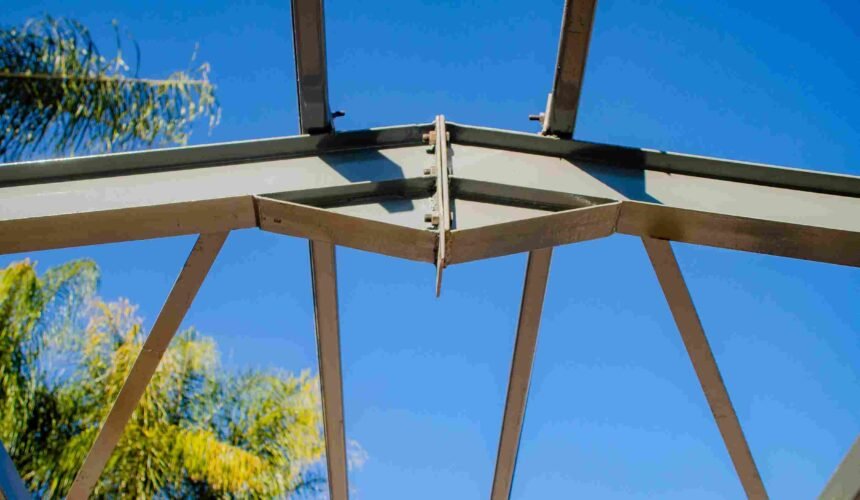
For buildings that need to handle higher wind or earthquake loads, we can install strategic steel bracing. Alternatively, we use Carbon Fiber Reinforced Polymers (FRP)—ultra-strong, thin strips that are glued to the underside of beams to provide incredible strength with almost no added weight.
3. Foundation Underpinning
If the ground has moved, we go beneath the building to strengthen the foundation, using “micro-piles” to transfer the building’s weight to deeper, more stable soil.
The Economic Case for Retrofitting
For property owners in Zimbabwe, retrofitting is a savvy financial move:
Preserve Capital: Retrofitting is typically 30–50% cheaper than demolishing and rebuilding.
Reduce Liability: A structural failure can lead to catastrophic legal and financial consequences. An engineer’s certificate of stability is your best insurance policy.
Increase Property Value: Modernized, safe buildings attract higher-tier tenants and better insurance premiums.
Our Vision for the Urban Horizon
As part of our commitment to Zimbabwean Ingenuity, Ncube Consults is dedicated to preserving our urban heritage. We don’t just see “old buildings”; we see opportunities for renewal.
Don’t let your asset become a liability. If you manage an aging property in our urban centers, it’s time for a professional health check.